
The Ghana Voice,
Accra, Ghana
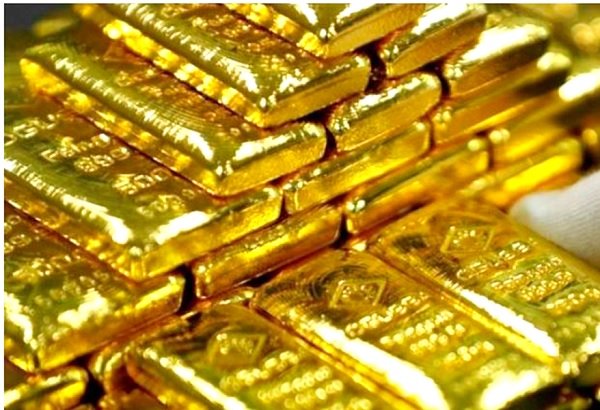
Bank of Ghana Defends Gold Reserve Diversification Amid Price Volatility
The Ghana Voice 19-03-2026Ghana’s central bank is receiving renewed backing for its recent reserve management strategy following a sharp downturn in global gold prices, a development that has reignited debate over the country’s gold reserve policy.
The Chief Executive Officer of the Ghana Gold Board, Samuel Gyamfi, has publicly defended the Bank of Ghana’s decision to offload part of Ghana’s gold holdings, describing the move as a “safe and sensible” diversification measure in line with global reserve management best practices.
Price Correction Reignites Debate
Gold prices, which recently surged to record highs of around $5,500 per ounce, have in recent weeks declined sharply to approximately $4,680 per ounce. The downturn underscores the inherent volatility of bullion, traditionally considered a safe-haven asset during periods of economic uncertainty.
Market analysts note that while gold serves as a hedge against inflation and currency risks, its price swings can expose reserve portfolios—especially in emerging and middle-income economies—to valuation shocks.
Strategic Diversification
According to Gyamfi, the central bank converted roughly 22 tonnes of Ghana’s gold reserves into U.S. dollars, integrating the proceeds into the country’s gross international reserves and deploying them into yield-generating instruments.
“This was not a loss of national assets, but a strategic reallocation,” he emphasized, adding that Ghana’s reserves remain intact, with the shift aimed at enhancing liquidity and optimizing returns.
Ghana’s gross international reserves currently stand at approximately 5.7 months of import cover—a level considered modest by global standards—making diversification critical to mitigating concentration risks.
Balancing Safety, Liquidity, and Returns
Reserve portfolio management typically prioritizes three key principles: safety, liquidity, and returns. Over-concentration in a single asset class—particularly one as volatile as gold—can undermine these objectives.
By reallocating a portion of its gold holdings into liquid foreign currency assets, the central bank effectively reduced exposure to commodity price swings while strengthening its ability to respond to external shocks, including currency pressures and balance-of-payments needs.
Analysts say the timing of the move has proven advantageous, as the recent price correction would have otherwise eroded the value of Ghana’s gold-heavy reserve position.
Policy Implications
The development highlights a broader policy question facing resource-rich economies: how to balance the symbolic and strategic value of gold reserves with the practical demands of macroeconomic stability.
For Ghana, the move signals a shift toward more active reserve management, aligning with practices seen in other central banks that dynamically adjust asset allocations based on market conditions and risk assessments.
Looking Ahead
While gold remains a key component of Ghana’s reserve portfolio, policymakers appear increasingly focused on diversification as a tool for resilience.
The recent price decline may strengthen the case for a more balanced approach, particularly as global commodity markets continue to exhibit heightened volatility.
For now, the central bank’s decision appears to have insulated Ghana from the worst effects of the recent gold price slide—offering a real-time example of how proactive reserve management can safeguard national financial stability.