
The Ghana Voice,
Accra, Ghana
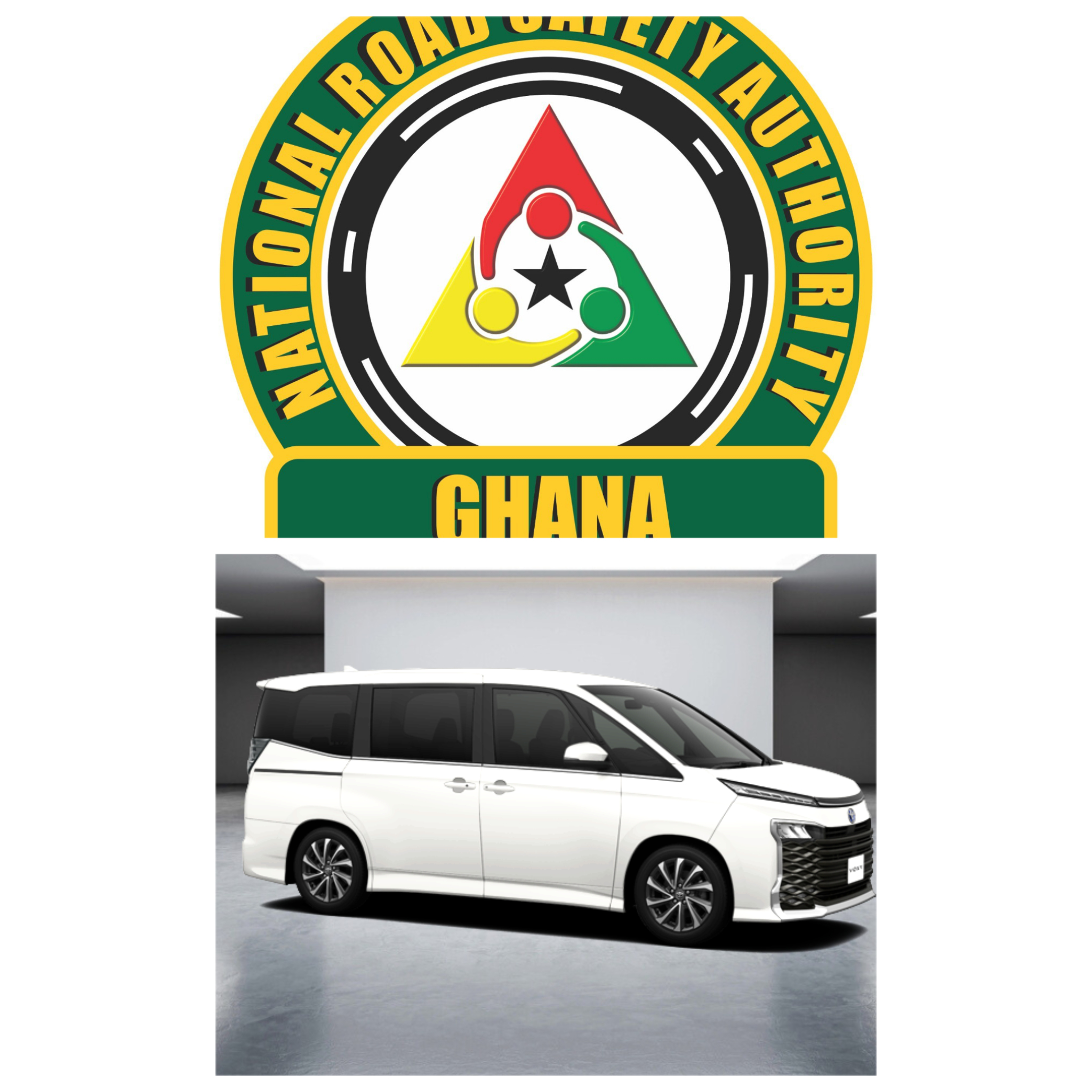
Rethinking the Ban on Toyota Voxy for Commercial Use in Ghana
The Ghana Voice 10-04-2026By Owusu Barfi-Mensah- Financial Security Analyst
The recent directive by the National Road Safety Authority (NRSA) to ban the commercial use of the Toyota Voxy has sparked intense public debate. While the intention—protecting lives—is both necessary and commendable, the approach raises critical questions about policy balance, economic consequences, and whether we are targeting the real causes of road accidents in Ghana.
Safety must never be compromised. But a blanket ban on a single vehicle type risks oversimplifying a complex problem and, in the process, creating new ones.
The Real Problem: Our Roads
One cannot discuss road safety in Ghana without confronting the condition of our roads. Across the country, many highways and feeder roads are plagued with potholes, weak shoulders, poor drainage, and inadequate signage.
Even vehicles specifically built for commercial transport—such as the Toyota Hiace—struggle under these conditions. It is therefore difficult to accept the argument that the Toyota Voxy alone is a major safety threat.
A well-built vehicle can still become dangerous on a poorly maintained road. If road conditions compromise stability, then all vehicles—not just the Voxy—are exposed to similar risks. Addressing infrastructure is not optional; it is fundamental.
Driver Behaviour: The Biggest Risk Factor
The NRSA itself has consistently identified human error as the leading cause of road crashes. Speeding, reckless overtaking, fatigue, and weak enforcement of traffic laws continue to dominate accident reports.
This raises an important point: accidents are largely behavioural, not mechanical.
A reckless driver in a so-called “safer” vehicle remains a threat to public safety. Conversely, a disciplined and well-trained driver operating within limits poses significantly less risk, regardless of vehicle type.
If we are serious about saving lives, then enforcement must take centre stage—stricter policing, continuous driver training, and the use of technology such as speed cameras and vehicle tracking systems.
The Conversion Debate: Regulate, Don’t Generalise
Concerns about right-hand to left-hand drive conversions are valid. Poorly executed modifications can compromise vehicle safety. However, the Toyota Voxy is not the only vehicle subjected to such conversions in Ghana.
Models like the Toyota Vitz and others operate under similar conditions without facing outright bans. This raises issues of regulatory consistency and fairness.
The real problem is not the vehicle—it is the absence of standardized conversion processes and certified engineering oversight. The solution, therefore, lies in regulation: certify garages, enforce strict inspection regimes, and hold operators accountable.
“Designed for Families” – A Weak Argument
The claim that the Toyota Voxy is unsuitable because it was designed for family use does not fully hold. Families are transported in these vehicles every day across the world without incident.
Globally, many vehicles initially designed for private use are adapted for commercial purposes under proper regulation. The real issues are load management, maintenance standards, and operational limits—not whether the vehicle was originally marketed to families.
Economic Reality Cannot Be Ignored
Beyond safety, the ban has serious economic implications. Many drivers rely on the Toyota Voxy because it is relatively affordable, fuel-efficient, and accessible within Ghana’s current import structure.
Larger commercial vehicles remain expensive due to high import duties, making them out of reach for many operators.
An outright ban, without viable alternatives, risks:
Destroying livelihoods
Increasing unemployment
Driving up transport fares
Reducing mobility for low-income commuters
This transforms a road safety intervention into a broader socioeconomic disruption.
When Regulatory Failure Becomes Public Burden
Perhaps most concerning is the NRSA’s own admission of systemic regulatory failures—uncontrolled imports, weak inspection systems, and unregulated conversions.
These are institutional lapses. Shifting the consequences onto drivers and vehicle owners is neither fair nor effective.
The focus should instead be on strengthening the system: improving DVLA inspections, enforcing import standards at the ports, and licensing certified conversion centres.
A More Balanced Way Forward
Ghana does not need a prohibition-driven approach; it needs reform.
A more effective strategy would include:
Enforcing strict safety and roadworthiness standards for all vehicles
Certifying and regulating vehicle conversions
Investing in road infrastructure and fixing accident-prone zones
Strengthening driver training and enforcement mechanisms
Reviewing import duties to make safer commercial vehicles more accessible
Providing transition support for affected operators
Conclusion
The NRSA’s decision to ban the Toyota Voxy for commercial use may be well-intentioned, but it is ultimately misdirected.
Road safety cannot be achieved through selective bans. It requires strong institutions, consistent enforcement, improved infrastructure, and policies that reflect economic realities.
Until these systemic challenges are addressed, banning one category of vehicle risks becoming more symbolic than practical.
If the goal is truly to save lives, then the solution must go beyond the vehicle and confront the deeper issues that make Ghana’s roads unsafe for everyone.