
The Ghana Voice,
Accra, Ghana
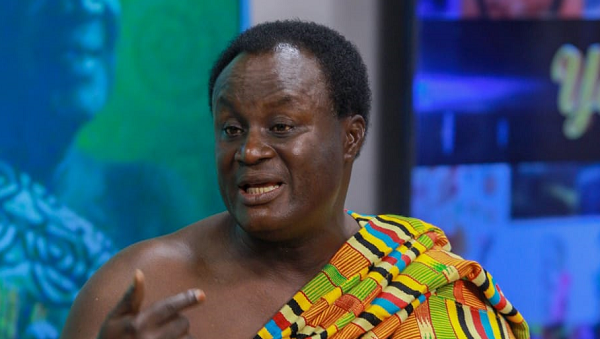
Nii Moi Thompson Challenges Anokye Frimpong’s Historical Claims, Warns Against Distorting Ghana’s Past
The Ghana Voice 22-02-2026A Renowned Ghanaian development economist has launched a blistering critique of lawyer and media commentator Yaw Anokye Frimpong, accusing him of persistently distorting Ghana’s political history and misrepresenting key events in the country’s independence struggle.
Dr Nii Moi Thompson, Chairman of the National Development Planning Commission, described what he termed “serial historical fabrications” as dangerous to national cohesion and development, warning that inaccurate accounts of Ghana’s past could inflame ethnic tensions and undermine the nation-building vision of Dr. Kwame Nkrumah.
The United Party controversy
One of the central issues raised by Dr Thompson concerns claims attributed to Anokye Frimpong that the United Party (UP) was formed to contest the 1956 elections on a promise that regions wishing to secede would be allowed to do so after independence.
Dr Thompson insists this is historically inaccurate.
According to widely documented records, Ghana attained independence on 6 March 1957. The United Party, he notes, was formed later that year in November 1957 following the passage of the Avoidance of Discrimination Act, legislation introduced by Nkrumah’s government to prohibit political parties organised along ethnic, regional or religious lines.
Groups such as the Ga Shifimo Kpee reportedly joined the UP at its launch at Bukom Square in Accra on 3 November 1957. To suggest, Dr Thompson argues, that the UP existed to contest the 1956 elections is to reverse the chronological sequence of events.
The 1948 ex-servicemen petition
Dr Thompson also disputes claims that Ako-Adjei dictated a petition for the 1948 ex-servicemen to Nkrumah, who allegedly wrote it down, leading to his arrest when colonial authorities recognised his handwriting.
He describes this account as “fiction.”
Historical records from the Watson Commission , established to investigate the disturbances following the shooting of ex-servicemen on 28 February 1948 , indicate that the petition was signed by Mr B. E. A. Tamakloe, leader of the Ex-Servicemen’s Association. Official responses from the colonial governor were addressed to Tamakloe, and the permit for the demonstration was issued in his name.
In his 1957 autobiography, Nkrumah makes no claim to authoring the petition, noting only that he was aware of the association and had considered working with it politically. Similarly, in The Gold Coast Revolution, George Padmore states that no one in the UGCC initiated the demonstration, though Nkrumah and J. B. Danquah had addressed ex-servicemen at an earlier rally.
For Dr Thompson, these omissions in primary sources cast serious doubt on the version promoted by Anokye Frimpong.
The “Black Star” debate
Perhaps most strongly, Dr Thompson challenges the assertion that Anton Wilhelm Amo — an 18th-century philosopher from the Gold Coast — coined the term “Black Star,” later adopted by Marcus Garvey.
Amo, who became a respected academic in Germany, is sometimes referred to in modern German scholarship as the “Black Star of German philosophy.” However, Dr Thompson argues that there is no evidence Amo coined the political phrase “Black Star” in the sense later popularised in Pan-African thought.
He credits Garvey with first using the term metaphorically, pledging to make Africa “the Black Star among the constellation of nations.” Garvey subsequently founded the Universal Negro Improvement Association and launched initiatives such as the Black Star Line shipping company.
Nkrumah, who acknowledged in his autobiography that Philosophy and Opinions of Marcus Garvey profoundly influenced him during his time abroad, later adopted the Black Star as a central national symbol for independent Ghana , embedding it in the national flag and naming state institutions after it.
To retroactively attribute the phrase to Amo, Dr Thompson contends, is historically unsustainable.
Yaw Anokye Frimpong is known for his commentary on Ghanaian history, traditional authority disputes and political developments. He has appeared on platforms such as Joy FM and Angel TV, and was in 2024 announced as the presidential candidate of the People’s Redemption Movement.
While acknowledging his visibility and influence, Dr Thompson argues that media houses have a responsibility to balance commentary with rigorous historical scholarship.
“Development is history,” he stated in his facebook post, warning that when historical narratives are distorted, they can generate needless resentment among ethnic groups and weaken the shared foundations of Ghana’s democracy.
The debate highlights a broader issue confronting Ghanaian public discourse: the tension between popular historical storytelling and academic historiography. As conversations about identity, chieftaincy disputes and the legacy of independence continue to shape national politics, historians say the stakes are high.