
The Ghana Voice,
Accra, Ghana
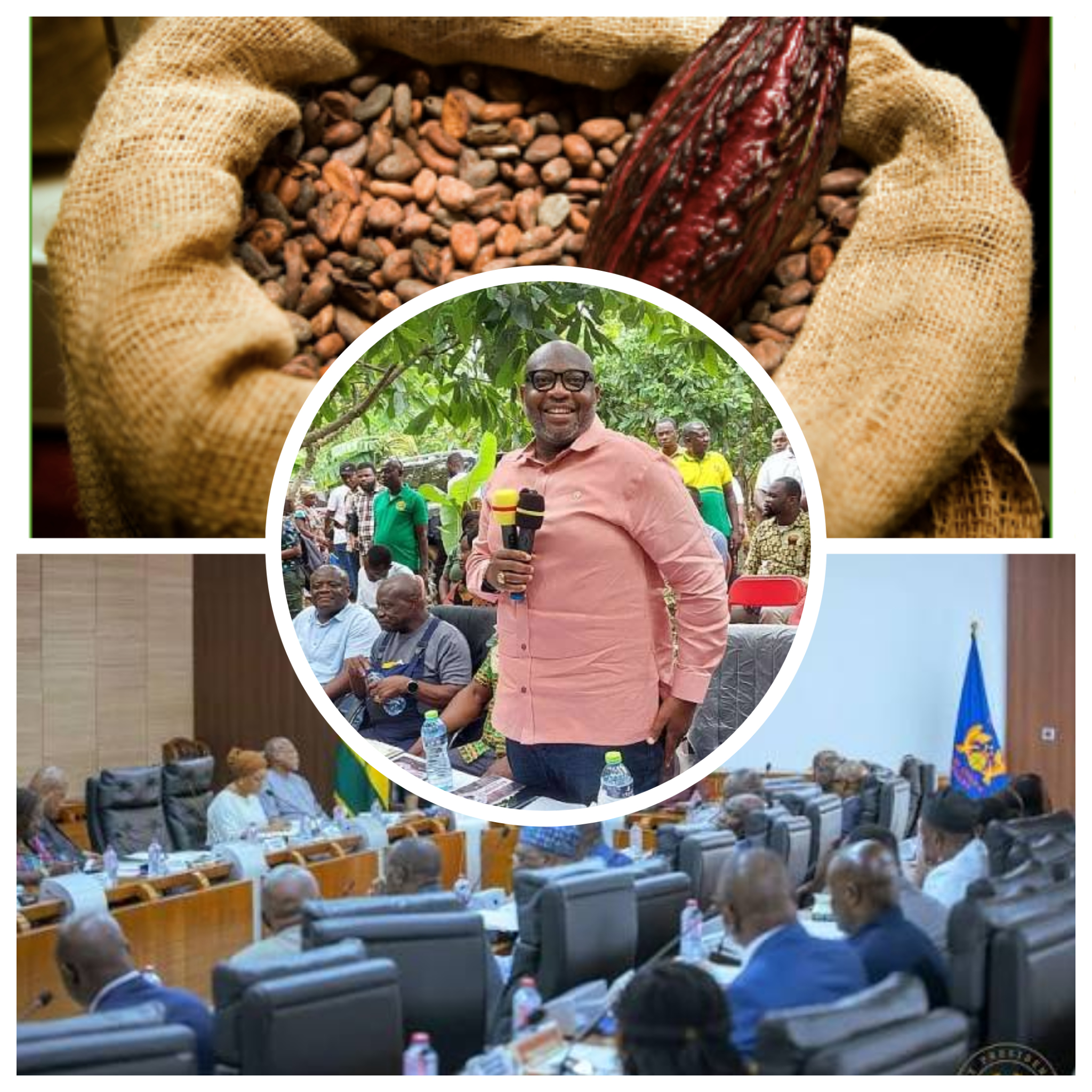
Mahama Convenes Emergency Cabinet Meeting Over Deepening Cocoa Sector Crisis
The Ghana Voice 10-02-2026President John Dramani Mahama has summoned an emergency Cabinet meeting scheduled for Wednesday, February 11, 2026, to deliberate on mounting challenges confronting Ghana’s cocoa sector, following growing agitation among cocoa farmers over delays in payment for their produce.
The emergency session was announced in a Facebook post by the Minister for Government Communications, Felix Ofosu Kwakye, signaling the seriousness of the situation within one of Ghana’s most critical economic sectors.
Rising Farmer Discontent
Across several cocoa-growing regions, anxiety and frustration are building among farmers who claim they have supplied cocoa beans but are yet to receive payments. For many of them, the delays are not just administrative setbacks but direct threats to their livelihoods.
Cocoa farming remains the backbone of thousands of rural households in Ghana, providing income that sustains families, funds children’s education, and supports local economies. Farmers say the delayed payments are affecting their ability to prepare for the next farming season, procure farm inputs, and meet basic household needs.
Some farmer groups have warned that prolonged delays could discourage cocoa production, potentially affecting national output and export earnings if not urgently addressed.
Political Tensions Over Responsibility
The cocoa payment crisis has also triggered sharp political exchanges between the Majority and Minority in Parliament, each blaming the other for the sector’s difficulties.
The Minority recently held a press conference accusing the government of neglecting cocoa farmers and failing to properly manage the affairs of the Ghana Cocoa Board (COCOBOD). According to them, inefficiencies and poor oversight have worsened the sector’s financial health and undermined farmer confidence.
However, COCOBOD’s management has rejected these accusations, insisting that the challenges are largely inherited. Officials argue that the previous administration saddled the institution with significant debt and unsustainable borrowing, which has constrained current operations and delayed critical payments to farmers.
Cocoa Sector’s Economic Significance
Ghana is the world’s second-largest producer of cocoa, and the crop remains a major source of foreign exchange for the country. The sector directly supports over 800,000 farm families and indirectly sustains millions through transportation, trading, processing, and export activities.
Any instability within the cocoa value chain therefore carries national economic implications, particularly at a time when Ghana continues to pursue economic recovery and agricultural modernization.
Industry analysts note that COCOBOD has in recent years struggled with rising operational costs, climate change effects on cocoa yields, ageing farms, smuggling challenges, and fluctuating global cocoa prices.
The institution has also relied heavily on syndicated loans to finance cocoa purchases each season, a model critics say has become increasingly unsustainable.
Expectations from the Emergency Cabinet Meeting
The upcoming Cabinet session is expected to review COCOBOD’s financial position, assess payment bottlenecks, and explore both immediate and long-term interventions to stabilize the sector.
Stakeholders within the cocoa industry anticipate that government may consider financial restructuring measures, enhanced funding mechanisms, and policy reforms aimed at improving operational efficiency and restoring farmer confidence.
Agricultural economists have long argued that strengthening transparency in cocoa financing, improving productivity through farm rehabilitation, and diversifying value addition remain crucial to sustaining Ghana’s cocoa dominance globally.
Impact Beyond Policy Debates
For farmers, however, the crisis extends beyond policy discussions and political disagreements. In many cocoa-growing communities, the delay in payments is already translating into postponed medical care, unpaid school fees, and reduced investment in farm maintenance.
Community leaders say the outcome of the Cabinet meeting will be closely watched, not only for policy direction but also for reassurance that government remains committed to safeguarding the welfare of cocoa farmers who have historically sustained Ghana’s agricultural economy.
As the farmers and other stake holders await the outcome of the emergency deliberations, the cocoa sector once again finds itself at the center of national attention, underscoring its enduring importance to Ghana’s economic stability and rural livelihoods.