
The Ghana Voice,
Accra, Ghana
Ghana Unveils Aggressive Gold-Backed Reserve Strategy to Hit 15-Month Import Cover Target
The Ghana Voice 25-02-2026Ghana’s push to build a war chest of foreign exchange reserves is taking a decisive turn toward gold-backed accumulation, tighter mining sector enforcement, and structural reforms aimed at reducing chronic FX leakages.
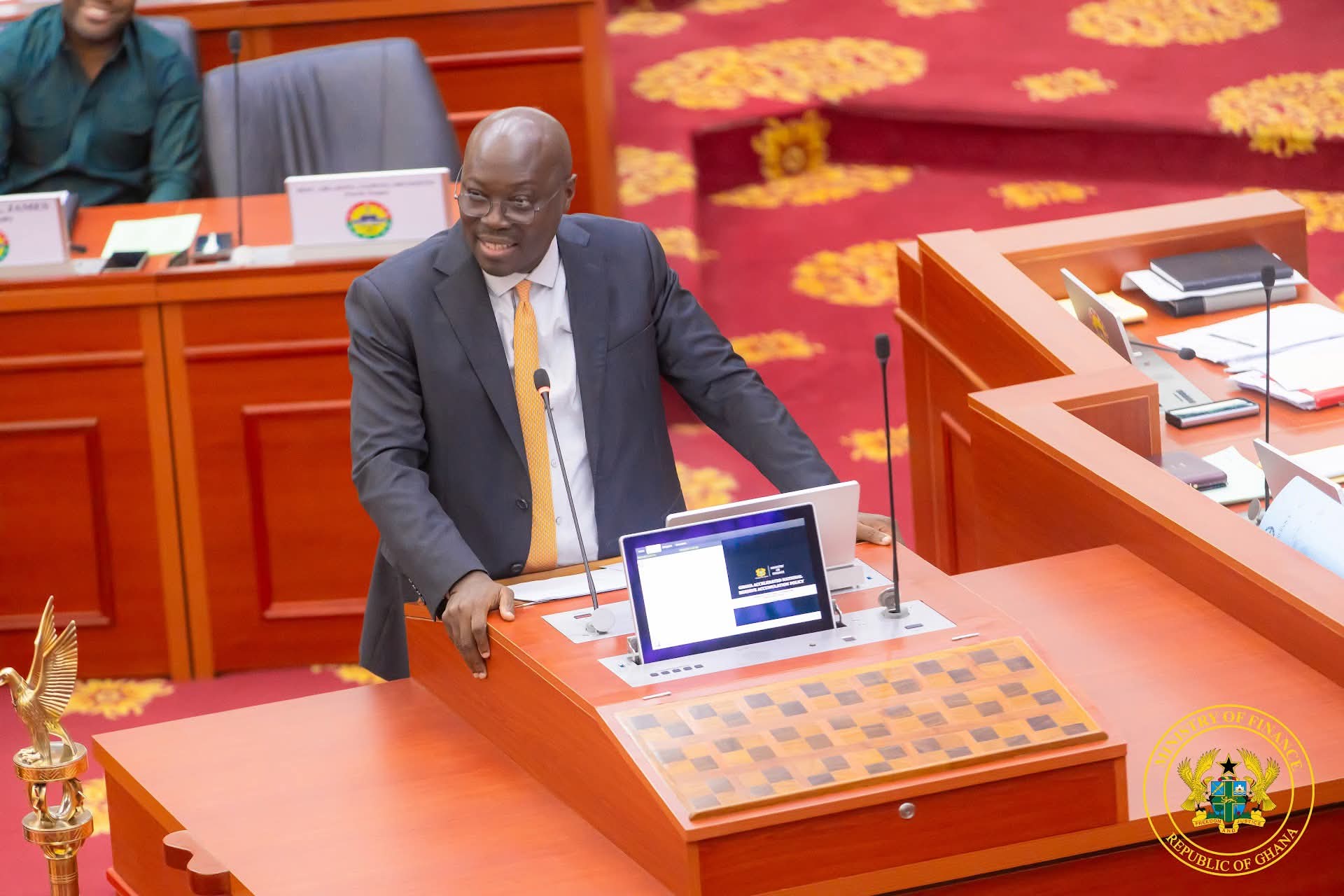
Presenting detailed policy directions in Parliament, Finance Minister Cassiel Ato Forson outlined a coordinated framework that leverages large-scale mining, artisanal gold production, energy reforms, and export diversification to support the Ghana Accelerated National Reserve Accumulation Policy (GANRAP).
At the heart of the strategy is a restructuring of gold acquisition from large-scale mining firms. Government will enforce its preemption rights under the Ghana Gold Board Act, 2025 and the Minerals and Mining Act, 2006 to secure a minimum 20 percent of large-scale gold output — equivalent to about 0.57 tonnes weekly.
An inter-agency committee, co-chaired by the Ministers for Finance and Lands and Natural Resources and including the Governor of the Bank of Ghana, the Minerals Commission, and the Ghana Gold Board, will oversee compliance.
In a move designed to retain value domestically, the acquired gold — strictly in doré form — will be processed locally before being shipped to London Bullion Market Association (LBMA) refineries for final bar casting and stamping. The refined bullion will then be added to Ghana’s physical reserves and may only be sold with prior Cabinet and Parliamentary approval.
Financially, the transaction structure is notable: gold purchases will be conducted in cedis at prevailing interbank rates, with discounts determined by volume. Analysts say this could simultaneously deepen cedi liquidity, reduce dollar demand pressures, and strengthen the Bank of Ghana’s reserve buffer — if pricing and transparency mechanisms hold.
The Ghana Gold Board, acting as national assayer and maintaining field officers in mining “gold rooms,” has reportedly piloted the arrangement with nine large-scale firms over the past six months.
Beyond large-scale mining, the strategy aggressively targets the artisanal and small-scale mining (ASM) sector. Government aims to mop up at least 2.45 tonnes of ASM gold weekly, translating into roughly 127 tonnes annually over the next three years.
At current global gold prices, that volume could generate over US$20 billion annually in foreign exchange inflows — a transformative figure in the context of Ghana’s reserve position.
The Ghana Gold Board will hold sufficient liquidity to cover three to four weeks of gold purchases.
It will assume full responsibility for off-take agreements and export sales from March 2026.
Gold-backed derivative and hedging programmes will be deployed to manage price volatility.
Price incentives and bonuses will be introduced to discourage smuggling.
The Board will sell all FX proceeds exclusively to the Bank of Ghana under a formal agreement.
The model essentially centralises ASM gold trading under a single state-backed counterparty — reducing arbitrage losses, formalising flows, and potentially tightening oversight across the gold value chain.
Complementary measures include intensified enforcement against illegal mining through the National Anti-Illegal Mining Operations Secretariat (NAIMOS), a water-body cleansing campaign involving the Ghana Armed Forces, and scaling up land reclamation and traceability systems.
Government intends to expand non-traditional exports — including cashew, shea, rubber, and processed agricultural products — while revitalising cocoa production through farm rehabilitation and productivity improvements.
Oil and energy reforms form another major pillar. Authorities plan to accelerate development of new oil fields such as Pecan and implement the Gas-to-Power Transformation Policy, which includes:
Construction of a state-owned 1,200MW power plant,
Development of a second gas processing plant (GPP2),
Upstream petroleum sector reforms to attract investment.
Ghana has historically spent about US$3 billion annually covering energy sector shortfalls and Independent Power Producer (IPP) obligations , a drain described as a “leaky bucket” on foreign reserves. Officials argue that shifting toward domestic gas utilisation could significantly reduce dollar outflows tied to fuel imports and capacity charges.
Remittance mobilisation and digital financial integration are also being prioritised to capture a greater share of diaspora inflows.
Critically, the reserve strategy is underpinned by a commitment to maintaining a primary fiscal surplus. Without sustained fiscal discipline, policymakers acknowledge that reserve gains could quickly erode under renewed debt and import pressures.
For investors, the policy signals a structural pivot toward gold-backed reserve accumulation, tighter FX centralisation, and reduced external vulnerability. If effectively implemented, it could:
Strengthen exchange rate stability,
Reduce sovereign risk premiums,
Improve Ghana’s external debt sustainability metrics,
Enhance confidence in the Bank of Ghana’s reserve adequacy.
However, execution risks remain particularly around enforcement in the ASM sector, transparency in gold pricing, hedging strategy management, and the fiscal costs of sustaining large-scale gold purchases in cedis.
If Ghana succeeds in scaling gold inflows while plugging energy-related FX leakages, the country could meaningfully shift from cyclical reserve vulnerability toward long-term external resilience — a structural break from the volatility that defined the 2022–2023 crisis period.