
The Ghana Voice,
Accra, Ghana
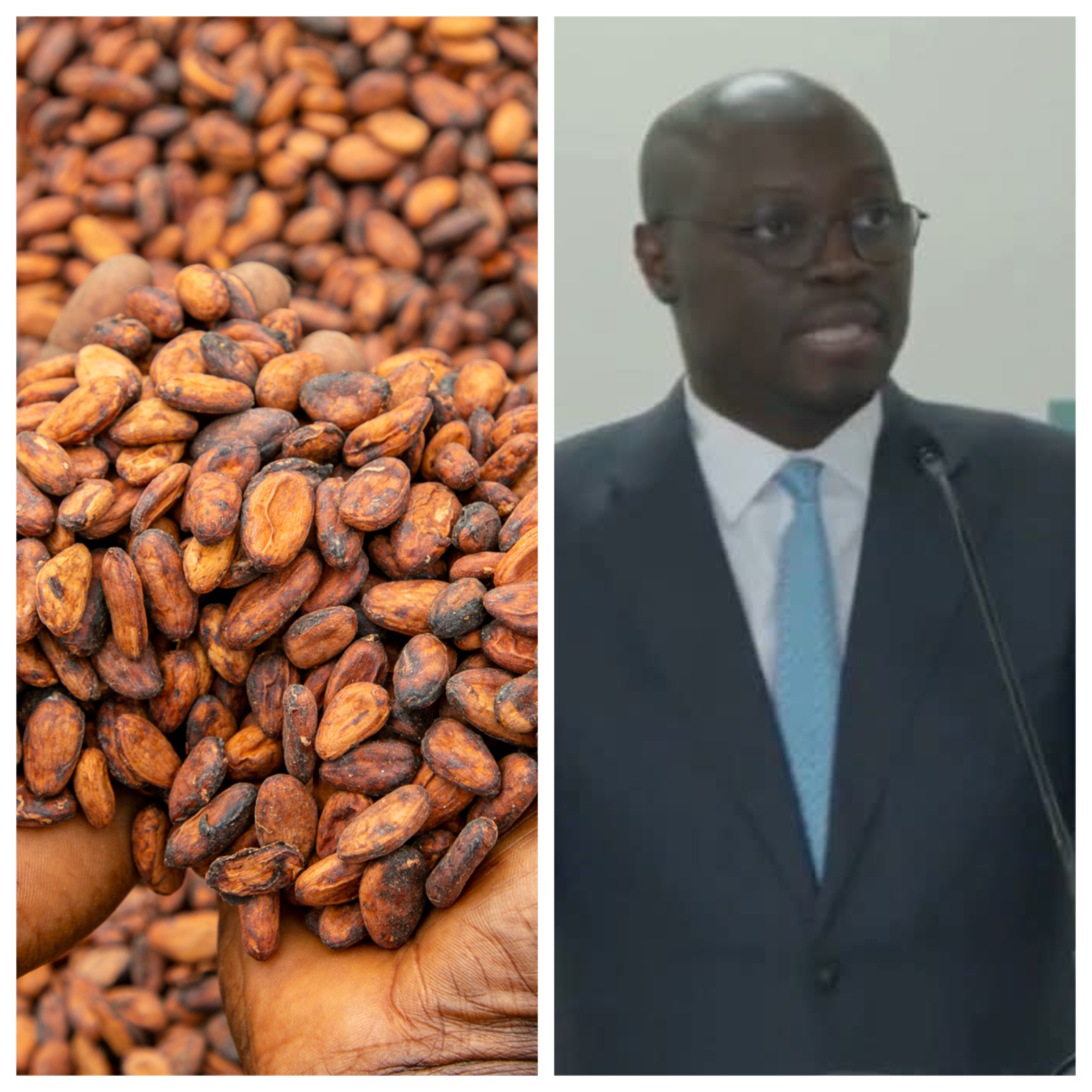
Cocoa Crisis Exposed: How COCOBOD’s Debt, Price Wars and Global Market Shifts Are Hitting Ghanaian Farmers
The Ghana Voice 12-02-2026Ghana’s cocoa sector, long regarded as the backbone of rural livelihoods and a major pillar of foreign exchange earnings is facing one of its most turbulent periods in decades, following revelations by Finance Minister Dr. Cassiel Ato Forson that deep-rooted financial, structural and market challenges have pushed the industry into crisis.
Speaking at a press conference after an emergency Cabinet meeting convened by President John Dramani Mahama on February 11, 2026, the Finance Minister outlined the chain of decisions, global market forces and institutional weaknesses that have culminated in delayed payments to farmers and growing instability in the sector.
How Pricing Decisions Sparked the Current Crisis
At the heart of the problem lies the delicate balance between paying farmers competitively and maintaining Ghana’s competitiveness on the global cocoa market.
The 2025/2026 cocoa season began in August 2025 with a producer price of GH¢51,660 per tonne, calculated as 70 percent of a projected global Free-On-Board (FOB) price of US$7,200 per tonne. The price was based on an exchange rate of GH¢10.25 to the US dollar.
However, the regional cocoa market was quickly disrupted when Côte d’Ivoire, Ghana’s biggest competitor and the world’s leading cocoa producer , announced a new farmgate price in October 2025 that was 20 percent higher than Ghana’s.
The price disparity immediately created a dangerous incentive for cocoa smuggling, a long-standing threat to Ghana’s cocoa industry. To prevent mass diversion of cocoa beans across borders, Ghana’s Producer Price Review Committee increased the producer price to GH¢58,000 per tonne, reflecting currency depreciation and rising farmer expectations.
While the price adjustment helped protect Ghana’s cocoa output from smuggling, it inadvertently created another challenge: Ghana’s cocoa became expensive on the international market.
Global Price Collapse and Buyer Withdrawal
Soon after Ghana raised its producer price, global cocoa prices began to fall sharply. Despite the downturn, COCOBOD continued selling cocoa until global prices dropped below US$6,400 per tonne roughly the cost of producing and transporting cocoa from farms to export ports.
According to government analysis, the higher farmgate price meant Ghana’s cocoa became less attractive to international buyers compared to cocoa from competing countries selling at lower rates.
The consequence was severe. Buyers began showing reluctance to purchase Ghanaian cocoa, leaving COCOBOD with limited revenue inflows while still obligated to pay farmers at higher rates.
The Financing Model That Backfired
The payment crisis confronting cocoa farmers today is also closely tied to changes in COCOBOD’s financing model.
Historically, Ghana relied on annual syndicated loans , credit facilities secured from international banks to finance cocoa purchases during each production season. However, confidence in Ghana’s economic outlook weakened in recent years, making it increasingly difficult to secure these loans.
By 2023, COCOBOD’s financial position had deteriorated significantly, forcing it to restructure its cocoa bills after defaulting on obligations. That same year, syndicated loan arrangements suffered major delays, with funds arriving four months after the cocoa season had begun.
To cope with financing difficulties, COCOBOD introduced a new model during the 2024/2025 season, allowing international buyers to directly finance cocoa purchases. While the approach provided short-term relief, it significantly reduced COCOBOD’s liquidity and its ability to make independent purchasing and trading decisions.
The Production Forecast Disaster
One of the most damaging setbacks to COCOBOD’s finances occurred during the 2023/2024 cocoa season, when production projections proved dramatically inaccurate.
COCOBOD projected output of 800,000 tonnes and committed nearly 787,000 tonnes in forward sales contracts. However, actual production fell drastically to 432,145 tonnes , representing a shocking 45 percent shortfall.
Experts note that production forecast errors typically range between 5 and 15 percent, making the deviation unprecedented.
The shortfall forced COCOBOD to roll over contracts totalling 333,767 tonnes at significantly lower average prices of US$2,661 per tonne. Government estimates indicate that this decision resulted in losses exceeding US$1 billion,funds that could have supported farmer incomes, infrastructure and sector sustainability.
Mounting Debt and Government Bailouts
COCOBOD’s financial strain deepened further in 2024 when it failed to repay part of its syndicated loan obligations. Government was forced to intervene with a US$70 million emergency bridge financing from the Ministry of Finance to prevent a default.
Even this intervention failed to stabilize COCOBOD’s finances, as the organization subsequently defaulted on repayment of the emergency support, leaving the current administration to inherit substantial debt burdens.
What This Means for the Ordinary Ghanaian Farmer
While the crisis involves complex financial and global market dynamics, its impact is most deeply felt in cocoa-growing communities across Ghana.
For many farmers, delayed payments mean postponed school fees, difficulty accessing healthcare and reduced capacity to purchase fertilizers, pesticides and labour. Some farming families now face uncertainty about preparing their farms for the next crop season, raising fears of declining future production.
Beyond farmers, the cocoa sector supports transportation workers, purchasing clerks, rural traders and agro-input suppliers, meaning financial instability in COCOBOD threatens broader rural economic activity.
Government’s Proposed Way Forward
Cabinet has approved several emergency interventions, including expedited payments to farmers and sweeping reforms within COCOBOD to improve governance, financial discipline and operational efficiency.
Government also plans to aggressively expand domestic cocoa processing, shifting Ghana’s traditional reliance on exporting raw beans towards value addition , a strategy widely viewed as essential for improving national revenue and job creation.
A Sector at a Crossroads
The revelations from the Finance Minister’s press conference highlight the fragile balance between protecting farmer incomes, maintaining global competitiveness and managing institutional sustainability.
For decades, cocoa has symbolized economic resilience for Ghana. However, the current crisis underscores how global price volatility, policy miscalculations, debt accumulation and climate challenges can converge to threaten even the country’s most dependable industries.
As government prepares to implement reforms, cocoa farmers — the true custodians of Ghana’s chocolate economy — remain cautiously hopeful that policy decisions taken in Accra will translate into timely payments, improved productivity and a more stable future for the crop that has shaped their lives for generations.