
The Ghana Voice,
Accra, Ghana
24HR Economy(Midnight) Discounts and Floor Prices: Inside the Subtle Price War Reshaping Ghana’s Fuel Market
Lawrence 19-01-2026A quiet but consequential debate is unfolding within Ghana’s downstream petroleum sector, triggered not by official press statements but by carefully worded social media posts from two of the industry’s most influential players: Star Oil and GOIL PLC.
At the centre of the exchange is a familiar but sensitive issue — fuel pricing flexibility versus regulatory discipline, and what role the National Petroleum Authority’s (NPA) floor price should play as Ghana experiments with a growing night-time economy.
The Spark:24HR Economy( Night-Time )Pricing vs Regulation
Star Oil CEO Kwame Tieku set the tone with a hypothetical but pointed suggestion:
“Imagine StarOil pricing petrol at GHS 9.50 per litre after 10pm till 4am to support the night-time economy when demand is lower… but that will be below the NPA floor price.”
The comment was widely interpreted as both an expression of innovation and a critique of regulatory constraints that limit dynamic pricing, even during off-peak hours when demand is subdued.
But GOIL PLC’s CEO, Edward Abambire Bawa, swiftly countered with a reality check rooted in compliance and market facts.
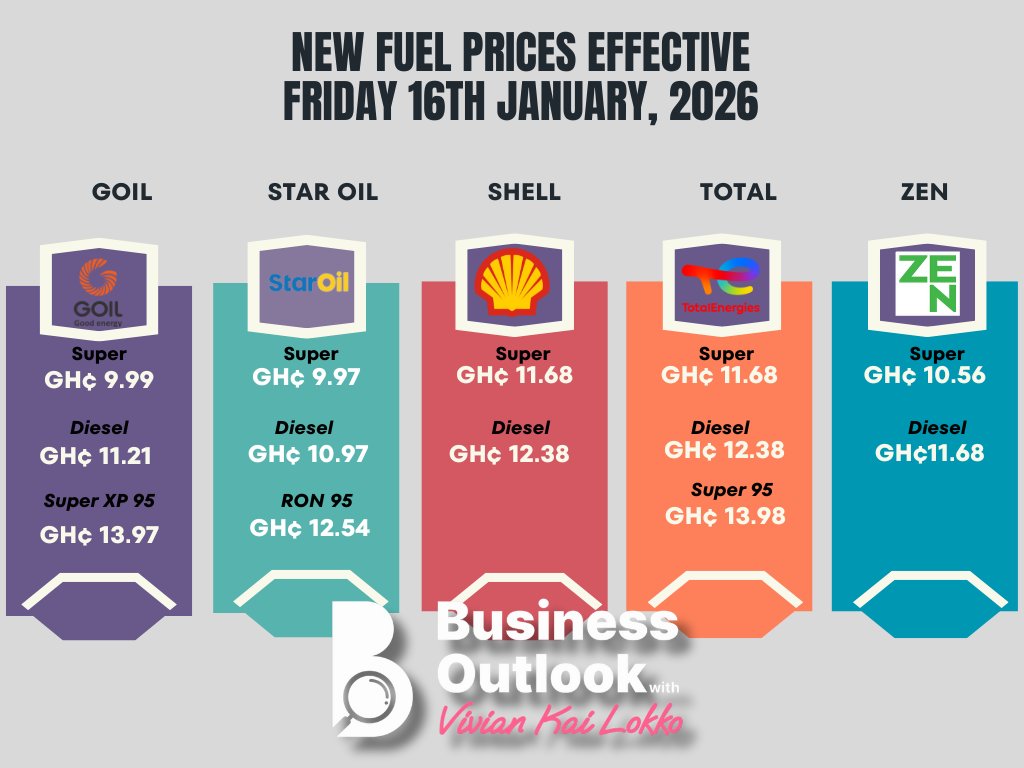
“Some industry players are claiming that they can reduce prices further, yet in reality they cannot even compete at the approved floor price of GHS 9.80 for PMS in this pricing window.”
He questioned the credibility of calls for deeper price cuts when some Oil Marketing Companies (OMCs) are still retailing petrol at GHS 9.97, well above the regulatory minimum.
“Calling for deeper price reductions while pricing above the regulated floor undermines the credibility of that claim,” he added.
Beyond the Banter: Why the Floor Price Matters
While the exchange may appear as competitive posturing, industry analysts say it exposes a deeper structural truth: the floor price is not a mere consumer protection tool,it is a macroeconomic stabiliser.
Maintaining a regulated floor price:
Guarantees minimum revenue for OMCs, enabling predictable cash flows
Buffers the sector against oil price volatility, exchange rate swings, and geopolitical shocks
Protects debt servicing capacity, especially for firms with dollar-denominated obligations
Preserves investor confidence in a capital-intensive, cyclical industry
Removing or relaxing the floor price, experts warn, would risk margin erosion, weaken balance sheets, depress asset valuations, and potentially trigger capital flight, particularly at a time when Ghana is rebuilding macroeconomic credibility.
24 HR (Night-Time) Economy vs Sector Stability
The night-time economy argument is not without merit. Lower demand during off-peak hours theoretically allows for time-based pricing, a model seen in electricity tariffs, aviation, and ride-hailing platforms globally.
However, fuel retailing differs fundamentally:
Inventory is financed upfront
Margins are thin and highly regulated
FX exposure remains constant regardless of demand timing
In this context, analysts say innovation must operate within regulatory guardrails, not outside them.
A Competitive Signal, Not a Regulatory Revolt
Importantly, neither CEO is calling for regulatory defiance. Rather, the exchange reflects competitive signalling in a market where price leadership, compliance credibility, and public perception matter.
For GOIL, adherence to the floor price reinforces its positioning as a state-aligned, stability-first market leader.
For Star Oil, the night-pricing thought experiment signals consumer responsiveness and innovation, even if constrained.
The Bigger Picture
As Ghana’s fuel prices ease alongside a strengthening cedi and softer global oil prices, public pressure for further reductions will intensify. But the industry’s internal conversation suggests a clear boundary: price competition must not undermine sector viability.
The real challenge ahead is not whether petrol can be sold at GHS 9.50 after midnight, but how to balance affordability, innovation, and financial sustainability in a sector that underwrites transport, commerce, and national revenue.
For now, the NPA floor price remains the line no one can cross even in a Facebook post without risking more than just market share.